The Evolution of Data Architecture: From Monoliths to Malleability
From rigid systems to adaptive platforms, organisations are redesigning data environments to deliver agility, governance, and continuous innovation.
For many years, enterprise data strategies centred on relational databases and traditional data warehouses. While effective for structured data and historical reporting, these systems struggled to meet the demands of new data types and the pace of modern analytics. The growth of unstructured data, real-time processing, and advanced use cases such as machine learning quickly exposed the limitations of rigid, centralised models.
The rise of flexibility
The emergence of data lakes marked a significant shift. By allowing information to be stored in its raw, native form and separated from compute, organisations gained the freedom to retain structured, semi-structured, and unstructured data without pre-defining its purpose. This flexibility gave analysts and data teams the ability to explore and experiment at scale. However, without robust governance, many early data lakes became difficult to maintain, evolving into “data swamps” that hindered accessibility and value.
Expanding the ecosystem
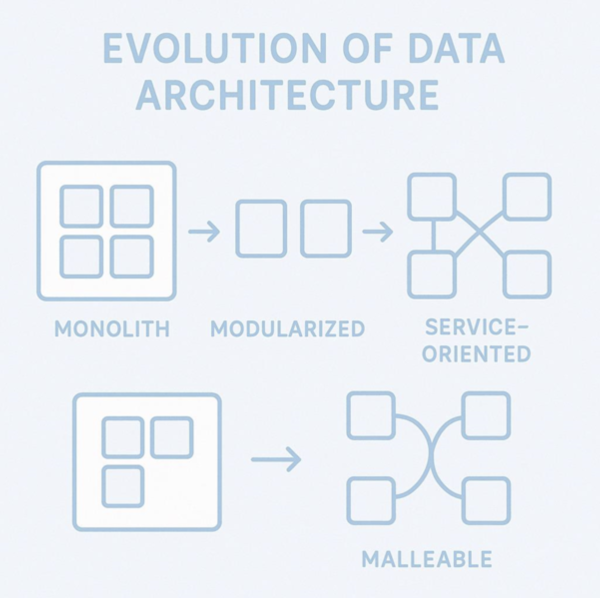
These challenges sparked a new wave of architectural innovation. Modern data warehouses, lakehouses, virtualisation, and data fabrics emerged, each seeking to balance flexibility with control. Today, unified data platforms bring governance, analytics, and scalability together in cohesive, cloud-native ecosystems. Across all these approaches, the direction is consistent: a move away from monolithic, one-size-fits-all systems towards modular, adaptive frameworks. Malleability has become the defining characteristic of modern architecture, giving organisations the ability to respond quickly to new technologies, regulatory requirements, and evolving business priorities.
The broader context
Globally, the data landscape is expanding at a rapid pace. Organisations are generating and consuming more data than ever before, while expectations for accuracy, timeliness, and actionable insight continue to rise.
In Australia and New Zealand, the trend mirrors this global movement. Many organisations are accelerating investment in cloud-based data environments and re-evaluating how integration, governance, and scalability can unlock innovation. Sectors such as financial services, healthcare, and agriculture are leading this charge, prioritising architectures that are AI-ready, trusted, and adaptable.
Looking forward
The evolution of data architecture is not about replacing one model with another. It’s about layering capability, refining approach, and aligning design with business goals. The future lies in adaptable combinations of tools and frameworks that suit each organisation’s unique context.
At Circini, we see this evolution as more than a technology trend; it represents a strategic shift in how data underpins decision-making. The organisations that thrive will be those whose data environments are reliable, accessible, and resilient; built to answer not only today’s questions, but the ones yet to be asked.